
We are just few days away from 2026. New year, new resolution, and old lessons will be carried forward! But before we proceed, just give yourself a thought about how many hours of screentime we have spent in 2025 and how many there will be in 2026!
It has now become a lifestyle to check our phones as soon as we wake up. We are very addicted and attached to those messages, entertainment, and the digital world. Even after that, when we start our day for work, connecting with family or friends, going out, entertainment, or activities, digital platforms live every second with us. Even attending meetings and taking notes are easily done by apps; we even relax by watching reels! Aging is an online activity. So collecting many events like that, the internet has become a part of our lives, a very inseparable one! But the question arises on are we using the apps or are the apps using us?
In all of the sky full of possibilities, digital privacy still feels like complex topic to many people, most of us think that it is techincal topic and we as common people cannot understand it! We at LIITverse change this narration and want common people to be aware of it. We consider digital privacy a daily life issue, and we want to contribute to the knowledge of Indian internet users who are becoming more connected and aware every year.
So, this guide will help you understand why digital privacy actually matters!

Why Digital Privacy Feels More Personal Than Ever in 2026
If we had the power to time travel and go back to the past (do you really want to???), where digital privacy sounds like something only meant for IT professionals or cyber experts, and compare it with today’s time, where it feels very personal to all of us, we would want to learn more.
Think about this,
Your parents and partner will not know about you as much as this little partner who stays in our hands all the time knows.
Your phone knows when you wake up and when you sleep…
Your apps know what you would be most interested in buying.
Your camera, just in seconds, recognises your fingers and face.
Isn’t this too easy yet too risky? If we look at the data, then over the years we have witnessed rapid digital adoption for all the aspects of life, which is good, but it comes with the amount of data generated to the system, and adding AI into the system, then privacy is now not limited to data, it is about patterns, behaviour, and identity.
So we can say that because of these reasons, we might have started to question our privacy in 2026.
What Digital Privacy Really Means for a Common Internet User
If we put this in very simple words, then digital privacy is about having control and about knowing such things that we should be aware of.
You should have the right to know:
- What all information about you is being collected.
- Who is this concerned person that is using all of this data, and what for?
- Is there any data cycle or storage life?
- Can we escape?
If we think that knowing all of these requires any coding or encryption, then we are not right. In real cases, we use all the basic apps that collect data, like WhatsApp, Instagram, Google, online banking, shopping apps, or streaming platforms, so we are already part of this digital data ecosystem.
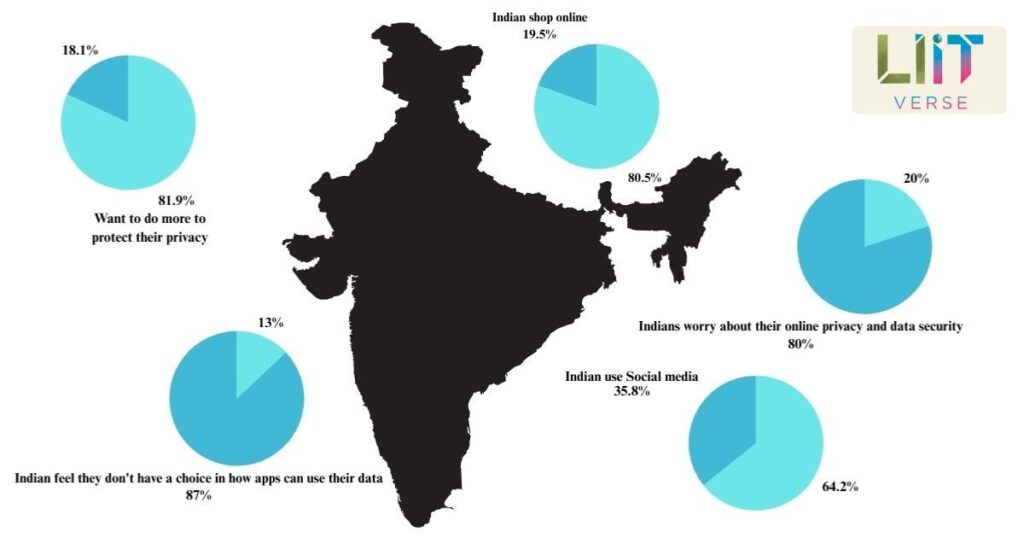
Digital Privacy vs Data Security: They Are Not the Same Thing
These might be confusing terms for all of us. So, Let us understand these terms more clearly:
Data security is about protecting data from hackers and breaches.
Digital privacy is about how data is collected, used, and shared, even legally.
Nowadays, a company may have strong security, but still they might be collecting more data of a user than necessary; in this case, this is not about a security issue, but it is a privacy concern. So, privacy is about how much of your information exists online even when you have locked it safely. With this, let’s connect the dots and move to the next topic, which you will find more interesting to know about!
How Your Data Is Actually Collected Without You Noticing
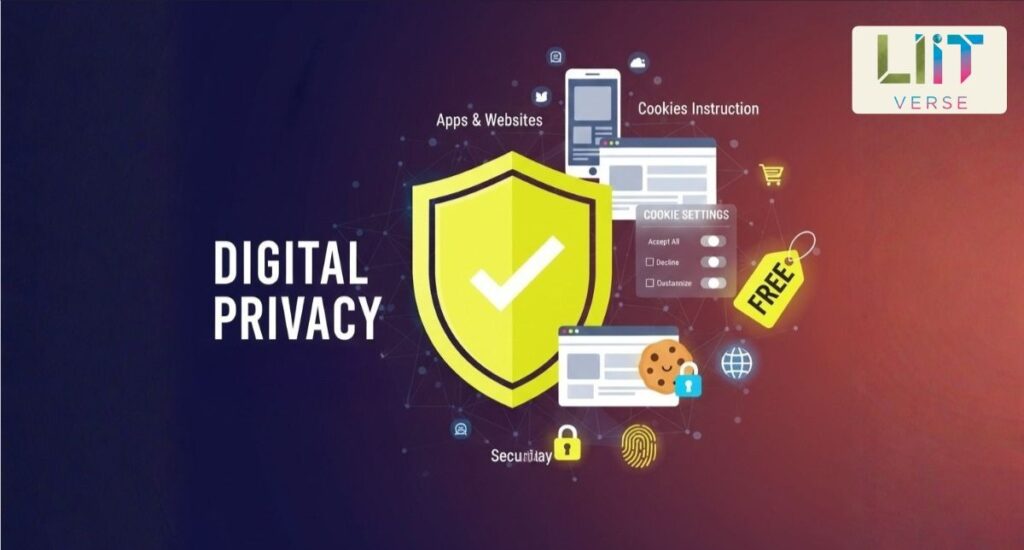
While this question arises, we often think that data is collected only when they actively fill out any form, but in reality, much of the data is collected very silently and even without users realisation. You must be wondering how that can be possible, so check out the below points to know that.
Apps That Track More Than They Need To
Have you ever noticed that even when you have downloaded a simple flashlight application, it asks you for your location access? Or any of the shopping apps want your microphone permission? Let’s think that some of these permissions are requested for features of the application, but the other times? They might be using it for data insights! Many of the users simply click on Allow without even thinking about what that means, and they are in a hurry to use the app as quickly as possible.
But this habit, over time, builds the detailed picture of your habits for the apps and the internet both!
So next time before clicking the allow button, think about if it is really required or not!
Websites, Cookies, and Silent Tracking
We don’t actually understand the cookies and grant request, thinking that if we deny them, we will not be able to use the site, but in reality, they help the website to track your details like:
- What you searched
- How long you stayed
- What you clicked
- Where you came from
and this information is often used to personalised the content according to your preference and show relevant ads to increase the conversation ratio for the brand. Other than this, it also contributes to the digital footprint of yours on the internet.
Free Services and the Hidden Cost of “Convenience”
If you think that any brand is giving anything for free to you, then be aware because if the service is free, then you are often paying with data.
We often think that we are using many things for free, like WhatsApp, emails, and Instagram, but have you ever wondered why these companies let us use them for free? Have you ever thought of the hidden cost we are paying for using these apps? Basically their system relies on data driven model, it is nothing like something bad is happening, but we users are not fully aware of what is going on. In life convenience always comes with the cost so in the digital world it is often your information.
What These Protection Laws Mean for You
The Indian government always looks upon our safety and security even without our realisation, same goes for digitalisation too, they are actively taking steps toward regulating data usage and protection policies. Some of the framework of the Indian government aims to:
- stoppage of unnecessary data collection
- improve the responsibility criteria
- offer users certain rights
Shall we now sing, “Yeh mera India, I love my India”?
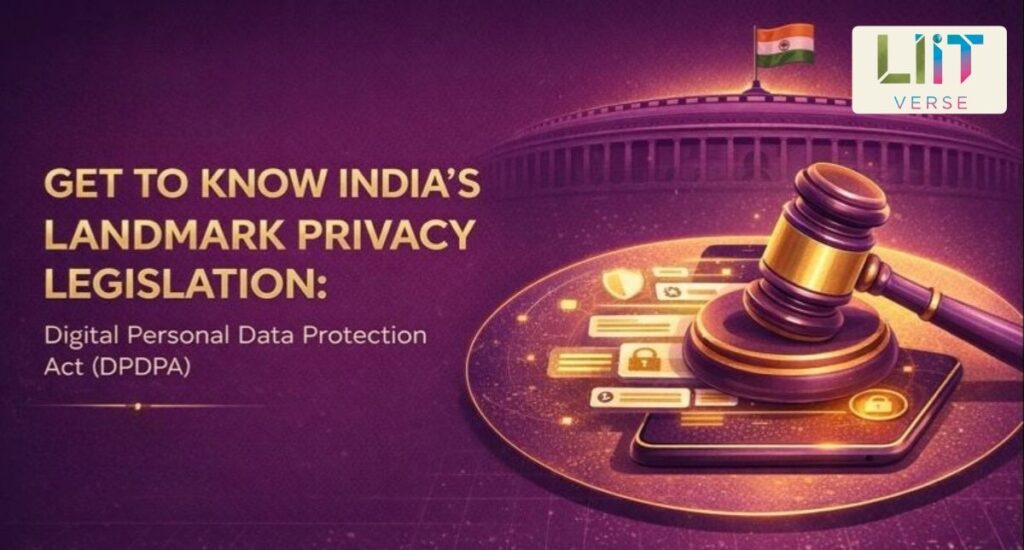
What the Indian Data Protection Framework Tries to Solve
They work with the basic objective of managing consent, limiting the purpose, and responsibly handling personal information.
Read About : THE DIGITAL PERSONAL DATA PROTECTION ACT
What They Cannot Fully Protect You From
Even though laws are trying their best to guard you from the violation of digital privacy, there are certain limitations, like no law can protect you from oversharing, unsafe habits, ignorance of privacy notifications, and blind trust in any digital site.
All of the law protection acts work best when there is a combination with user awareness.
Simple Things You Can Do to Protect Your Digital Privacy in 2026
In 2026, taking drastic action for protection, like deleting all the apps or not using the internet, is not what you can rely on! So let’s try to take small steps, and consistent habits can make the big difference.
And if we notice the pattern, unawareness of such issues is the main cause rather than thinking of carelessness. So if you want to protect the data in 2026, then it will be more about mindset and everyday behavior.
Small Habit Changes That Make a Big Difference
If we use the internet with slightly more intention, rather than just using it to pass your time, then it will be the easiest way to improve digital privacy. Let’s understand this with an example: if you want to install a new application, then take a few seconds and ask yourself, “Do I really need this app? Is it helpful for me for any long-term usage, or will I install it and might forget about it in a few days?” If that is going to remain unused in your phone, then it will surely continue collecting your background data.
Secondly, we often ignore deleting old accounts or logging out from the apps we don’t use often, which can be a point for your digital privacy data leakage. Other than that, most importantly, avoiding random quizzes and fun games that ask for your personal details and are available on the internet can reduce your data exposure drastically.
Device update is also a very crucial thing we ignore many times. We need to understand that it is not only about software updates or new features, but it also fixes the privacy loopholes and vulnerability issues that we as users might never be aware of.
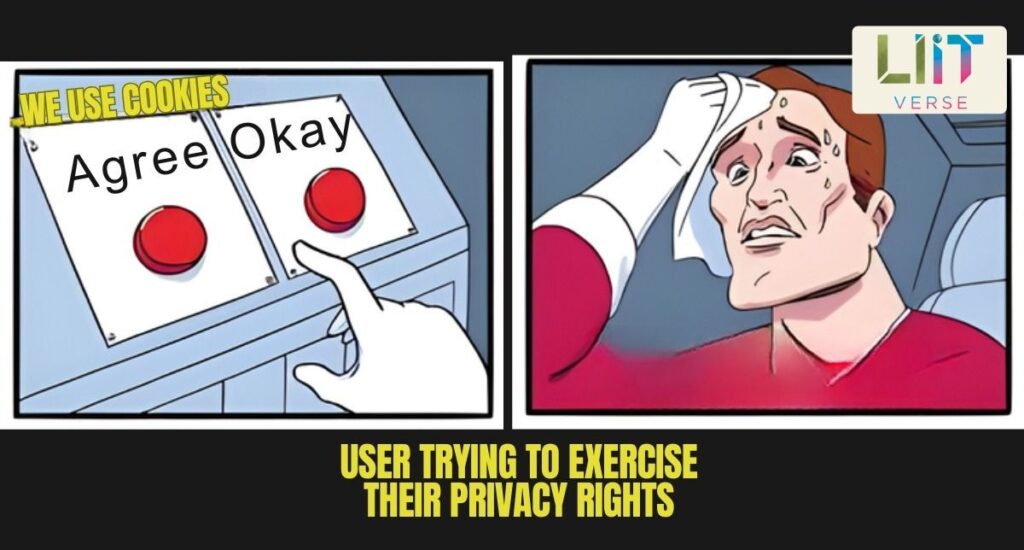
Being Mindful About App Permissions (Not Ignoring Them Anymore)
Most of the data collection that happens in India is due to our avoidance while granting the permission. We often click “allow” on each pop-up that arises, thinking it might be helpful for the future or app might not work properly if we don’t allow it, so this habit is worth considering in 2026.
We can occasionally review all app permissions and cancel the access where it is not required; these settings can be very useful in the long-term data privacy act. We must understand that restricting any permission will not affect any applications overall functionally, so we can take that chance for our long-term data protection. What happens if we restrict the nonnecessary uses? It will reduce silent data tracking of our activity. So we need to understand that not every app needs access to our location, gallery, microphone, or contact details.
Managing Passwords and Logins More Wisely
We often use the same password across multiple platforms, so repeated passwords and weak passwords can invite many privacy breaches, which means one leak can affect all those accounts. Also, staying logged in everywhere is also a very harmful thing, so we recommend logging out of accounts on rarely used devices to reduce accidental access.
Read about : Password Policy of India
Remembering dozens of passwords will be impossible, but using a structured pattern and trusted password can help without making things complicated.
Knowing Your Digital Footprint (Without Obsessing Over It)
By the time we understand that everything we do online leaves a trace, we don’t need to track everything in order to prevent it; just having general awareness will help.
Understand that every search, click, sign-up, and subscription is the collection of data and your digital footprint. We sometimes can prevent it by occasionally searching your own name online, and then we can simply review old accounts and check privacy settings.
How LIITverse Looks at Digital Awareness in a Rapidly Changing Tech World
Technology doesn’t wait for anyone to catch up, these are so many features and advanment, silently phone updates are witness to all of these, and we never know how long these growths can go on. For many users, all of these changes don’t feel like innovation; they might be taking it as ‘suddenly everything is working differently than yesterday.’
So here we are, at Liitverse. We don’t see digital awareness as a technical skill, rather it is life skill. understanding of the basics where you can decide for yourself what your choice is without needing any expert opinion on it. Technology is always designed to be easy, but easy should not come at the cost of awareness.
At LIITverse we understand that people don’t ignore privacy because they don’t care, but it is due to a lack of awareness amongst them. One should take the initiative to explain it in a way that general people will understand all of this and fits into the real world. While too little information is harmful, too much information is complex. So LIITverse simply exists to bridge the gap via power of knowledge.
Here we work with very simple approach to explain technology the way people actually experience it. We believe that when users understand why something matters, they naturally pay attention to how they use it, and that is what digital awareness will take.
Digital Privacy Is No Longer Optional, but It’s a Daily Choice
By this blog we know that digital privacy doesn’t come with warning, but it comes very quietly, so just relax, understand the pattern, and think before clicking on “I agree” when any application asks for one extra permission.
Let us take your important permission to conclude this blog with the awareness about downloading any app, allowing the access, or signing up quickly because there you are making your privacy choice. Most of them don’t feel important at that moment, but later on it could be, and at that time you might not even remember it. So choosing understanding, knowing when to pause and when to say no, and that choice, made daily, is what truly protects you.
Digital privacy in 2026 is not about fear, restriction, or isolation. It’s about presence. Being present with how technology fits into your life, instead of letting it quietly define it for you.
In the end, the reality is not that technology is unsafe. The reality is that technology is powerful, and power needs awareness.
FAQs
1. What does digital privacy mean?
Digital privacy basically means that how much control you have over your personal information, that too online. Which of your data is collected, who is collecting it and uses it, and how it is shared when you use any application, website, or digital service all come under the roof of digital privacy.
2. Should common internet users really be worried about digital privacy in India?
Yes. Even if you are using basic applications like social media, online shopping, and UPI apps, it all involves data sharing. It is a myth that it only affects tech professionals or large business owners; it equally affects the common everyday internet users.
3. Can applications and websites collect my data without me noticing? If yes, then how do they do so?
We mostly ignore the pop-ups where most of the data collection requests happen. Your data can be collected through permissions, cookies, tracking tools, and patterns of your internet usage. Most of the time it happens in the background while you are very focused on using the services or application.
4. In 2026, will my online personal data be safe?
While the risk exists, by the time data safety has improved. In India, data leaks, misuse, and over-collection will remain the topic of concern, especially when we as users are unaware of how our information is being handled.
5. Will AI affect my digital privacy?
In the era of personalisation AI systems always analyze the user behaviour to improve and deliver the desired results. While this seems like the smart service and easily gets us what we want, it also means more data is going to be processed, which will lead to the question about transparency and control.
6. Should we use private or incognito mode to stay anonymous and protect our information online?
There is no such thing as private and incognito modes that can stop the websites, apps, or internet providers from tracking your certain activities; it is mostly used to hide your browsing history on your device but not from the internet server.
Explore our blog on Why Apps Feel Like They’re Listening to You in 2026.
Pingback: Why Apps Feel Like They’re Listening to You in 2026 | LIITverse