
Have you ever experienced this? Don’t worry, you are not alone, almost everyone in India has experienced this. So, let’s think that you are sitting with your friends and talking about a pair of newly launched shoes or complaining about your phone battery. Just after a while, even without any search for anything or taking any action for your thoughts, simply by having a conversation with friends, later that day, you open Instagram, and there it is, an ad for shoes and an ad for a new phone are waiting for you to click buy now. Not surprised, right?
We know that this topic feels very personal to you, and that’s why we welcome you to the world of LIITverse, where we are going to bring you the exact facts of what is going on!
Continue to talk about that ad for shoes when you saw the ad. You obviously took a pause, and the first thought that popped into your mind was, “Is that my phone listening to me?” Honestly, nowadays it feels so common that we don’t even panic anymore. If we think about masses, then half the population is making memes and doesn’t bother anymore to think about it, while the other half are concerned but don’t know what to do next or how to prevent it!
But, at LIITverse, we have noticed that people are no longer confused by technology, instead they are surprised at how advanced this technology has become. Just like most 3- to 5-year-old children know how to operate phones and what to check on the internet!
Okay, well moving ahead, let’s now jump into solving the mystery, but here’s a trick question to ask yourself, does it happen when you’re alone and alert? because we have observed that it mostly happens when you’re half present!
Let’s get a better understanding of this as the blog progresses, so stay tuned!
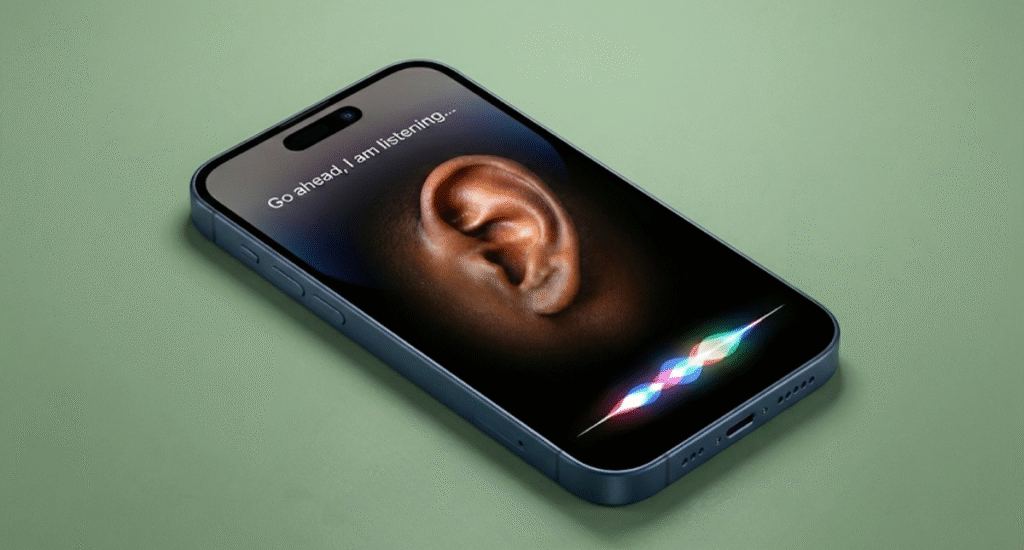
You Mentioned It Once. The ad showed up the same day.
You will agree on this 100% and now become more confident about your observation being right! But let me draw your attention to the reality check with this question – are they really listening to us, or are they just very good at noticing our continuous patterns and habits that even we don’t notice for ourselves? Just give it a thought about whether that ad is shocking or the timing of when you are receiving that ad?
Ads have been part of our lives since the very beginning, but earlier, the structure of the ad was like a salesman, shouting the wrong name, which was very easy for all of us to ignore but with the advancement of technology advancement, it comes right after you speak and that’s where it feels personal!

So… Are Our Phones Actually Listening to Us?
We are so convinced by this myth that technical answers will hit hard on us and also be boring to some extent. Also, in this pookie era, reassurance is also important so we know that you all want us to agree on your point and want us to speak it out loud that yes, that’s happening…. but reality sits somewhere in an uncomfortable middle.
So are you guys ready to face the harsh reality?
reveling in …. 3…. 2…1
“Most apps are not sitting there to record your conversation all day!”
Yes, you heard us right. Do you think this is how a large system survives?
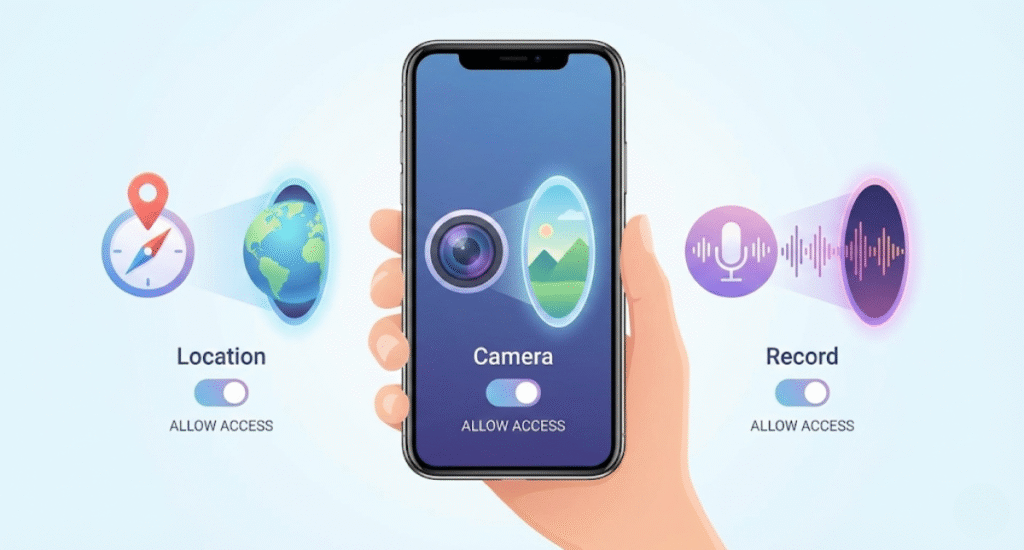
But yes, to some extent your phone can listen, and they are allowed to do so because you have allowed this to them. Do you remember clicking on “I agree” or “give permission”? Yes, exactly. There, your apps can track things you might not want them to!
If They’re Not Listening, Why Does It Feel So Accurate?
For this, think about your parents, they are the ones you have spent most of your life with. So many times it happens that they understand your needs without even you communicating them to them! Why? because they don’t need your voice, as they know your habit, that same pattern goes with your digital activity. Think about how much of your time goes in front of screens. And then after all of these hours, what do you expect?
If our close one understands us, without words, how much closer are we to our phones? Take a pause here and think about a single day without the internet. Routing it with those late-night scrolls, engaging with certain things or products and then swiping and scrolling to others whenever things don’t catch our interest. This feels much like a normal life for you, but it is a chain of data for the internet! By this, they know you more than you know yourself; they already know your interest and the pattern you follow and possible choices. So, when an ad shows up after a conversation, this is the reason. The system might be reacting to something you did years ago, when you might have been half asleep and you don’t remember that moment, but the system does!

This Is Where AI Comes In (And Why 2026 Feels Different)
Since we are talking about targeting ads so much, do you know when the digital ads started? Shockingly, it has been a part of our lives since 1994! Guys, it might be older than many of us. But, yes, ads are a very old structure in the digital world too. The only change it has seen is the structure of ads.
Earlier, ads were chasing you, but now they wait, and the structure is designed that way to nudge you at the very right time to make you tempted to take a step forward. You all can thank AI for this revolution in our lives. Did you know that AI doesn’t work on one action? It connects hundreds of tiny actions, and they predict and deliver the right ad at the right time.
Why Indian Users Feel This More Strongly Than Others
These answers can be given in the series of numbers, so the list is way too long but let’s look at the top 3 of the highlights. 1. In India, we don’t switch devices frequently, everything mostly happens on a single phone. We combine our personal and professional lives too on the internet, so from a data point of view, this habit ultimately delivers richer data patterns. 2. In comparison to other countries, we have affordable internet services and constant connectivity. Apps are not limited to collecting data while you are using that app, but they collect data throughout the time as they run in the background all day. 3. We have wild access to regional language content. We switch between apps very frequently, and that also creates dense behaviour signals for the apps.
So when an Indian asks, “Is my phone listening to me? The answer is not only yes but also more than listening, they already have seen you enough.

For users, permissions feel small. Their impact isn’t.
At LIITverse, we see users talk about privacy breaches like danger signs, but every reaction starts with the action! And here clearly we are forgetting our actions behind this cause. Digital privacy is nothing like an earthquake, which happens suddenly, but it is more like water damage – slow, quiet, and unnoticed until it’s everywhere. You ignore and don’t pay enough attention to all the notifications and app permissions, thinking you will require them someday, so for you that choice makes sense, and collectively when these actions combine, it explains why the system knows more than we expect it to.
Are we overthinking all of this?
If we’re being honest here, then the answer is YES. But we should understand that not every accurate ad means something wrong, we have to stop doubting everything and connecting dots. Rather, we can think towards the algorithm that makes this happen. Those thoughts will give us a better idea about our actions, and if you feel any discomfort with the algorithm going, then you must take preventive action; when millions of people independently feel the same, it is worth examining, not to get panicked about it but just to understand and to take care.
Things We Give Away Without Realising (Every Single Day)
We are too busy noticing technology that we often forget to look upon and understand that most privacy issues don’t come from hacking, but they come after a convenience decision that means we took that step for our convenience, and afterwards we don’t even remember it.
A few examples of these can be:
- You allow location access “all the time” because you feel that is the right action.
- Your habit of signing in with Google on each site because it is faster.
- Just because reading is boring, you accept all the cookies and permissions!
We are not here to judge, and in reality, most of us do one or the other of these things, so none of these decisions are wrong, but if we put all the smaller habits together, then it explains why apps feel so much more aware of us. Data suggest that privacy loss rarely happens in one big moment, but it is the collection of small events and forgettable clicks that causes the hacking.
Are The “Phone Is Listening” Myths We Still Believe?
Do you think it is practical to record everything that we speak, store the data, process the data, and then use it just to customise ads? is it even possible? We might need server bigger than Google for this! and that too for millions of people in the world, so just breathe and let’s not overthink it, but let’s clear up a few things, which is
- Your phones or internet are not recording and sending you advertisements related to it (most of the time, you cannot blame them if you give permission).
- Guys, we are in 2026, so private mode or incognito mode will never make you invisible, so let’s not try to beat technology and accept the reality.
- if you are thinking that turning off single permission Turning off will stop any data collection or erase your digital footprint, and then it might disappoint you.
So, privacy is not about hiding but taking control into your own hands.

If This Makes You Uncomfortable, Here’s What Actually Helps
The already created digital footprints are not just going to vanish by doing anything, even if you delete every app.
Just as a quick tip, you can consider 1. reviewing app permissions and removing them whenever you need to, 2. only installing apps if they are necessary, 3. being mindful while exchanging something digitally, 4. limiting unnecessary sign-ins, and 5. trying to log out wherever possible.
This isn’t a rule book to follow, but it is about habit and daily practice and awareness.
Some comforting ideas that don’t fully hold up to
We usually consider our thoughts as fact, like “I have nothing to hide,” or “Everyone is tracked anyway,” or “It’s too late now to take any action.” We agree that these thoughts are practical, and to everyone’s surprise, they also help many people to move on with this discomfort, but this is a very personal thing so it totally depends on you and how much you really want to let go!
As we always think that privacy is about hiding secrets, here that might not be the case because in the digital world it is about deciding which part of your ordinary life you want to become observable.
So Are Apps Listening…? Or are we just easier to predict now?
So by now we all should be nodding in the same direction, which is that most of the time apps don’t listen, they don’t create big drama about privacy and concern instead they do something less dramatic and more effective. Can you guess it?
Noticing your pattern and remembering it. This is the truth behind all the gossip about apps listening to us, and if it feels uncomfortable, then we must pay extra attention to things going on around us.
Frequently Asked Questions
1. Are apps really listening to our conversations through the phone microphone?
No, more than listing, they usually track behavior like your past search history, where you usually go, where you stay a little longer, your watchlist, and clicks, and everything of that kind of data. The system is very well aware of all of these signals, and it results in apps predicting your interest very accurately. and shows the relevant result, which we consider as “app listening theory.”
2. Why do ads appear right after I talk about something with someone?
We often forget, but if we are discussing it with anyone, then there is a fair chance that it has been going on in our mind for quite some time, and there is a strong possibility that we have done some digital activity related to it. So it always feels like you have talked about it for the first time, but the app catches the behavior that can be searched if you have something related to it, watched a reel, or surfed through a shopping app! And when the digital world lines up all of these signals, accurate ads appear quickly.
3. Does my phone microphone listen all the time?
Practically, that is not possible all the time unless the app has permission and you are actively using it. In other cases, if you have given access to the microphone, then you are giving them control and trusting them to do so. To prevent that, we recommend checking application permissions regularly and making changes.
4. Why do Indian users feel this “phone listening” problem more strongly?
The main reason for this feeling is the heavy use and dependency on mobile apps for daily lifestyle. The more you use it, the more targeting happens. Plus, compared to other countries, we have affordable data plans and multiple regional apps! Because of all of these, you always feel that your phone is listening to you.
5. Is this a real privacy problem or just smart advertising?
As technology is growing, we too are getting more and more involved in it, so blaming a single factor would be unfair! By this we can say that it is a mix of both. Smart advertising is not a problem, as it is not harmful or illegal. But the disappointment arises when users don’t understand how much of their data is being collected and how it is being used.
.
6. What can I realistically do if this makes me uncomfortable?
What if we tell you not to use the internet at all? Not possible, right? So just let it be because the solution is in small steps. You can opt for reviewing your app permissions or being mindful of what you search and what you are clicking on, limiting personalisation, and avoiding unnecessary app downloads. These are some suggestions from our side to reduce the predictability of your digital behavior.
Explore our blog on Digital Privacy in 2026: What Indian Internet Users Should Actually Worry About.
Pingback: Digital Privacy in 2026: What Indian Internet Users Should Actually Worry About - LIITverse - Life, IT & Universe Blog Digital Privacy in 2026, The Real Risks Indian Internet Users Ignore